A countertop can look like marble without being marble, but appearance tells you very little about how it handles heat, stains, sunlight, or daily cooking. “Artificial stone countertops” is a broad shopping term that can refer to engineered quartz, acrylic solid surface, and other manufactured surfaces. Each has different strengths. This guide explains what the materials are, how they compare with natural stone, what affects the price, and which questions to ask before ordering.
Artificial Stone Countertops at a Glance
Engineered quartz is a good option when you want consistent patterns and easy everyday cleaning, but hot cookware should go on a trivet. Solid surface works well when you want a smooth look with discreet joins, although it needs care around heat and scratches. Porcelain and sintered surfaces have different heat and outdoor-use properties, so check the exact product specification. Natural granite, marble, and quartzite offer one-of-a-kind patterns, with care needs that vary by stone and finish. The best choice depends on the look you want, where the countertop will be installed, how you cook, and the full supply and installation quote.
What Artificial Stone Countertops Are Made Of
“Artificial stone” describes a look or a group of manufactured countertop materials. It does not name one standard recipe. Before comparing prices or performance, ask the supplier for the exact material and product specification.
| Material | What it is | Main point to check |
|---|---|---|
| Engineered quartz | Quartz minerals and other ingredients held together with a binder | Heat guidance and whether it is approved for outdoor use |
| Solid surface | A manufactured blend of minerals and resin, often acrylic | Heat care, scratch repair, and the finish |
| Porcelain or sintered surface | A manufactured mineral-based surface made using a different process from resin-bound quartz | Edge design, installation requirements, and product-specific heat guidance |
| Natural quartzite | Stone formed naturally and cut from a quarry | The particular slab, finish, and care instructions |
Quartz and quartzite are different materials. Engineered quartz is manufactured. Quartzite is natural stone. “Faux stone” usually describes an imitation appearance and can refer to several materials, so it should not be treated as a precise product specification. For a wider comparison, see our kitchen countertop materials guide and our separate guide to solid surface countertops.
Artificial Stone vs Natural Stone Countertops
The most useful comparison is between specific materials, not two broad labels. A quartz countertop and a solid surface countertop do not perform in exactly the same way. Granite and marble also have different care needs.
| Question | Manufactured surfaces | Natural stone |
|---|---|---|
| Will the pattern be consistent? | Usually more consistent within a product range | Every slab has natural variation |
| Does it need sealing? | Many engineered quartz and solid surface products do not | Depends on the stone, finish, and supplier guidance |
| Can it handle a hot pan? | Check the exact product; use a trivet as the safe everyday habit | Varies by stone and installation; a trivet is still sensible |
| Will it stain or scratch? | Resistance differs by material and finish | Resistance differs greatly between marble, granite, quartzite, and other stones |
| Which costs less? | There is no universal winner | Compare complete quotes for the actual materials and project |
Choose manufactured stone if you value repeatable colors or a particular low-maintenance finish. Choose natural stone if the individual pattern of the slab matters most to you. If granite is on your shortlist, read our granite countertop guide before making the final comparison.
The appearance of artificial stone countertops
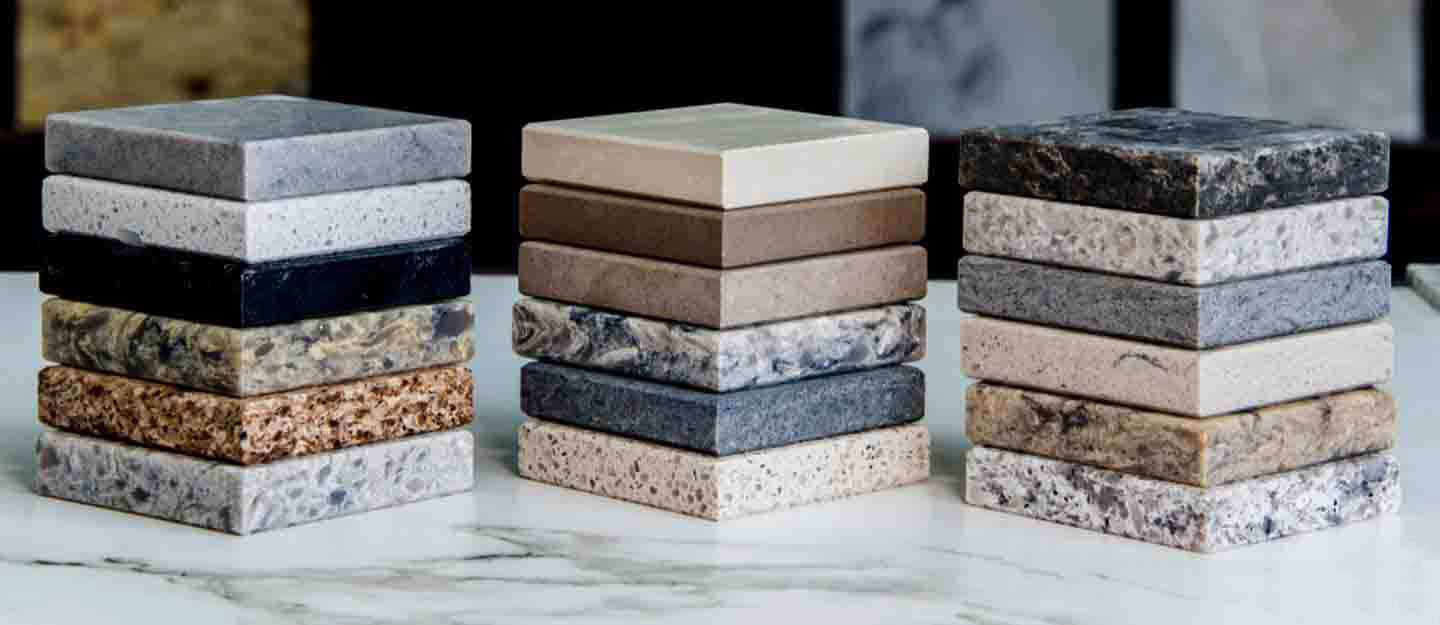
One of the major advantages of manufactured stone is the flexibility of the countertop design. The structure, texture, and color of a manufactured stone countertop or quartz stone countertop can be freely matched. Kitchen countertops can mimic the elegant look of natural stone or can be made with very delicate textures.

Artificial stones are available on different surfaces depending on the processing method.
- Matte finish for a soft, modern look
- Polished finish for a glossy, elegant surface
- Textured finish for a natural stone feel
Thanks to their wide variety, man-made stone countertops are suitable for all styles of kitchens. Due to its more beautiful appearance, faux stone countertops harmonize perfectly with modern-style kitchens. Kitchen islands made of artificial stone also look particularly elegant, especially in an open living concept.
Pros and Cons of Artificial Stone Countertops
The main attraction is choice. Manufactured surfaces come in many colors and patterns, from quiet solid tones to bold marble-style veining. Some are easy to clean and do not need sealing. They can also give buyers a more predictable appearance across a large kitchen than individually quarried stone slabs.
There are trade-offs. Resin-bound quartz can be damaged by direct heat, and a sharp impact can chip an edge. Acrylic solid surface can show scratches, though repair options depend on the product and finish. Some indoor products are unsuitable for long-term outdoor exposure. No countertop is scratch-proof, stain-proof, heat-proof, or maintenance-free. Ask for the care sheet and warranty for the material you are actually buying. Caesarstone, for example, advises using trivets on its quartz surfaces and distinguishes its outdoor collection from indoor quartz. Caesarstone US
Best Finishes, Colors, and Kitchen Styles for Artificial Stone Countertops
Artificial stone countertops have become a popular choice in modern interior design because they offer flexibility, elegance, and long-term durability. One of their strongest advantages is the wide range of finishes, textures, and colors available, allowing homeowners and designers to match them with almost any kitchen style.
Popular Color Options in Artificial Stone Countertops
Artificial stone surfaces are designed to replicate natural stone while offering more consistency and customization. Some of the most widely used color options include:
White and marble-inspired designs
These remain a top choice for bright, elegant kitchens. The marble-look finish gives a premium appearance without the high maintenance of real marble.
Grey and black tones
These shades are perfect for modern and industrial-style kitchens. They create a bold, sophisticated look and pair well with stainless steel appliances.
Neutral shades like beige and cream
Neutral tones are ideal for minimalist and classic interiors, offering a calm and balanced visual appeal.
Bold and modern colors
For contemporary designs, artificial countertops also come in unique shades like deep blue, green, or textured patterns that make the kitchen stand out.
Kitchen Styles That Work Best with Artificial Stone Countertops
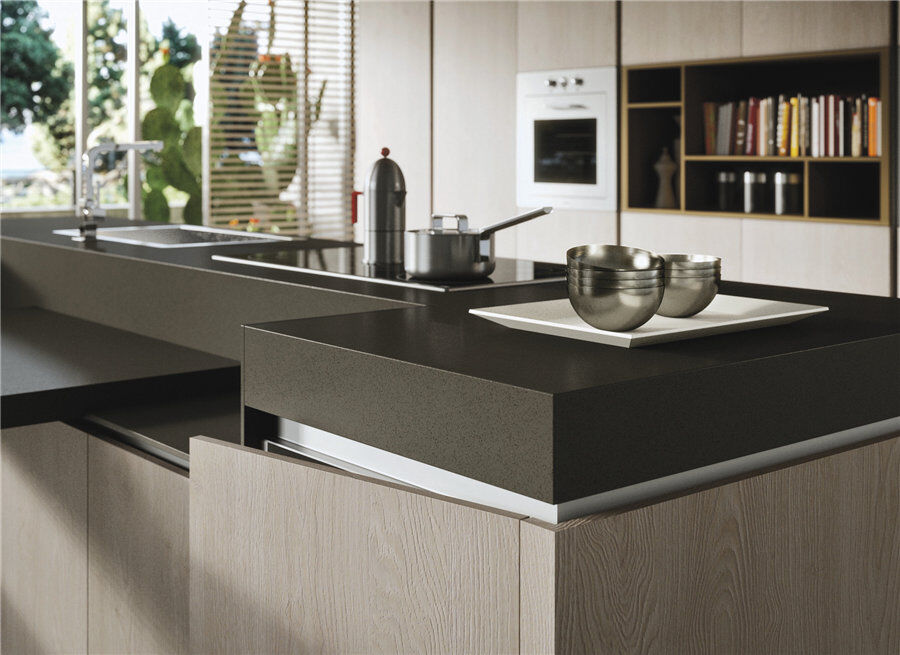
Artificial stone countertops are highly versatile and can blend into multiple design themes:
Modern kitchens
Modern interiors often feature sleek synthetic stone countertops with smooth finishes, straight edges, and neutral tones. The focus is on simplicity and functionality.
Minimalist kitchens
Minimalist designs prefer clean surfaces, matte textures, and subtle patterns. Artificial stone works well here because it maintains a clutter-free and uniform appearance.
Luxury kitchens:
High-end kitchens often use polished artificial stone with marble-like veining. These countertops enhance elegance while remaining more affordable than natural stone.
Contemporary kitchens:
Contemporary designs combine artificial stone countertops with stylish cabinetry, LED lighting, and mixed materials for a balanced modern aesthetic.
Because of this adaptability, artificial countertops are widely used in both residential homes and commercial spaces such as offices, cafes, and hotels.
Among the most visually compelling uses of artificial stone is as a countertop surface alongside walnut cabinetry, where the consistent, vein-free surface of engineered stone provides a clean contrast against the active natural grain of the wood, a pairing explored in detail in our collection of artificial stone with walnut cabinets.
How Much Do Artificial Stone Countertops Cost
There is no reliable single price for “artificial stone countertops” because the term covers different materials and a quote may cover only the slab or the entire finished installation. A basic straight run and a kitchen with a large island, waterfall ends, and several cutouts will have different costs even when the surface material is the same.
Ask each supplier to separate these items in the quote:
- Exact material, brand or product range, color, finish, and slab thickness
- Required slab quantity and allowance for pattern matching or waste
- Edge profile, backsplash, sink cutouts, and hob cutouts
- Templating, fabrication, and installation
- Packaging, shipping, import charges, and local delivery where applicable
- Warranty coverage and after-sales support
Parlunbuilding publishing note: This section still needs a real, dated price example or price range from your sales team if you want the title’s “Cost Guide” promise to be fully satisfied. Label it by market and state whether it is material-only, factory supply, or installed pricing. I would not publish an invented global price range.
How to Care for Artificial Stone Countertops
For daily cleaning, start with a soft cloth, water, and a cleaner approved for the exact surface. Wipe spills promptly, especially oils, dyes, and strongly colored liquids. Avoid assuming a cleaner recommended for granite is suitable for quartz or solid surface.
Use a trivet for hot cookware and a cutting board for food preparation. These simple habits help protect the finish and edges even when a product is described as durable. Do not assume a standard indoor slab is suitable for an outdoor kitchen. Ask the supplier to confirm UV and weather suitability for the specific product, particularly if the countertop will receive direct sun. Manufacturer instructions should take priority over general advice.
Safe Fabrication Matters
Cutting, grinding, and finishing some natural and engineered stone products can create hazardous silica dust for workers. Countertop fabrication and on-site alterations should be handled by trained professionals using appropriate dust controls. If a project needs changes after installation, arrange them with a qualified fabricator rather than cutting the slab yourself. The OSHA guidance on stone countertop fabrication explains the worker exposure and control measures.
How to Choose the Right Countertop for Your Kitchen
Start with how the kitchen will be used. If you cook frequently and want a consistent stone pattern, compare engineered quartz samples and their heat-care instructions. If smooth joins and a softer visual style matter most, explore solid surface countertops. For a sunny or outdoor space, compare products specifically approved for that location, including suitable ceramic countertops.
Next, view a full slab or a large sample in your kitchen lighting. Small samples can hide the scale of veining and changes in color. Match the countertop to the cabinets and backsplash, then request a complete quote for the chosen material, edge, cutouts, and destination. You can explore Parlunbuilding’s kitchen countertop options while narrowing your shortlist.
Common Applications
Due to their strength and versatility, synthetic stone countertops are widely used in:
- Residential kitchens
- Commercial kitchens
- Bathrooms and vanity areas
- Hotels and hospitality spaces
- Apartments and rental properties
Their combination of durability, aesthetic variety, and affordability makes them one of the most practical solutions for modern interior spaces.
Artificial Stone Countertop Questions
Is engineered quartz the same as quartzite
No. Engineered quartz is manufactured using mineral ingredients and a binder. Quartzite is natural stone formed in the earth.
Do artificial stone countertops need sealing
Many engineered quartz and solid surface products do not. Check the care instructions for the exact product rather than applying one rule to every manufactured surface.
Can you put a hot pan on an artificial stone countertop
Use a trivet. Heat tolerance varies by material, and direct heat can damage some surfaces or their finish.
Can artificial stone countertops be used outdoors
Some products are made for outdoor conditions, while others are intended for indoor use. Confirm UV and weather approval for the exact slab before ordering.
Do artificial stone countertops stain
Many surfaces resist everyday spills, but none should be described as impossible to stain. Clean spills promptly and follow the product care guide.
What affects the cost of an artificial stone countertop
Material choice, slab size, thickness, edge shape, cutouts, fabrication, installation, and delivery all affect the final price. Compare quotes with the same scope.
Plan Your Countertop With Parlunbuilding
A good countertop choice starts with the exact material, not just a photo or a color name. Share your kitchen measurements, preferred finish, sink and hob locations, and delivery destination with Parlunbuilding. Ask for a material specification, care instructions, samples where available, and an itemized quote so you can compare options with confidence.
Share your kitchen measurements, preferred finish, sink and hob locations, and delivery destination through our contact page to request material details and an itemized quote.